
Fundamentals
Coffee-to-water ratio: a practical starting guide
Weigh the coffee and water, keep the method clear, and adjust by taste—not by a universal rule.
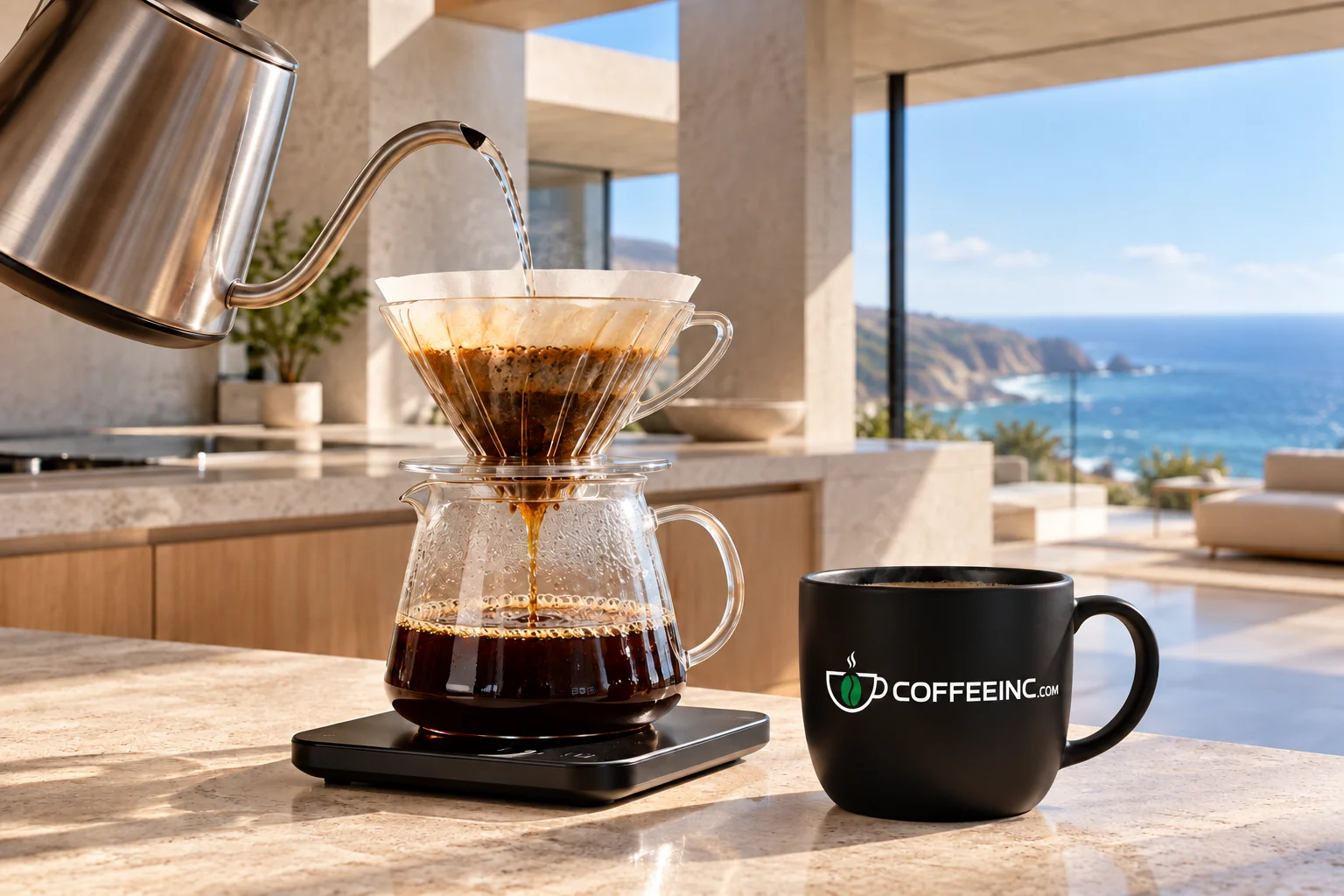
For drip or pour-over coffee, start with 1 gram of ground coffee to 16 grams of brewing water. That means 20 g coffee and 320 g water. It is a repeatable starting recipe, not a universal quality standard. Espresso ratios compare the dry dose with the beverage in the cup instead of water poured in. Weigh both sides, taste the result, and change one variable at a time.
What does 1:16 mean?
In a filter-coffee recipe, the first number is the mass of dry coffee and the second is the mass of water added. A 1:16 ratio uses sixteen times as much water as coffee by weight. It does not mean sixteen cups of water, nor does it describe the weight of the finished drink. Coffee grounds hold on to some water, so a 320 g pour does not produce 320 g in the carafe.
Ratio is mainly a way to make brew strength repeatable. Extraction—the share of soluble material pulled from the grounds—also responds to grind, water, contact time, agitation, and brewer design. The Specialty Coffee Association's brewing-chart explanation distinguishes beverage strength from extraction yield. A number alone cannot guarantee a pleasant cup.
Coffee ratio chart: starting points, not rules
These are CoffeeInc starting recipes for experimentation. The methods do not all measure the same output: filter and immersion use water added, while espresso uses beverage yield. Cold brew concentrate must be diluted to taste. Keep that distinction when comparing numbers from different guides.
| Method | Starting ratio | Example | Measure |
|---|---|---|---|
| Drip or pour-over | 1:16 | 20 g coffee + 320 g water | Water added |
| French press | 1:16 | 30 g coffee + 480 g water | Water added |
| Espresso | 1:2 | 18 g coffee → 36 g espresso | Beverage in cup |
| Cold-brew concentrate | 1:5 | 60 g coffee + 300 g water | Water added, then dilute |
The SCA's certified-home-brewer test begins at 55 g of coffee per liter of brew water—about 1:18 by weight—and adjusts grind and contact time to reach its measured brew range. That is a test procedure for brewers, not a command that every home recipe must use 1:18. Likewise, an SCA survey found roughly 1:2 was a common espresso dose-to-yield ratio among baristas; it is a useful reference, not a fixed definition of good espresso.
How much coffee do you need?
For a 1:16 filter recipe, divide planned water in grams by 16. If you want to pour 500 g of water, 500 ÷ 16 gives 31.25 g of dry coffee; round to about 31 g. Going the other direction, multiply your coffee dose by 16: 25 g coffee calls for 400 g water. A kitchen scale removes the guesswork caused by scoop size and differences between whole beans and grounds.
Our coffee-to-water calculator does that arithmetic for different batch sizes. Measure water as you brew rather than guessing from the final mug volume. If you need a full 12 oz of finished coffee, start with more than 12 oz of brewing water because some stays in the grounds; the amount retained varies with the coffee and brewer.
Why the method changes the measurement
Pour-over and automatic drip
Weigh dry grounds in the filter, tare the scale, then weigh the water as you add it. Try 1:16 for the first cup. Keep the brewer, grind, and pouring pattern steady while you compare 1:15 for a more concentrated cup or 1:17 for a lighter one. Pour-over technique can change flow and contact time, so moving the ratio may not be the only change you taste.
French press and other immersion brewers
Weigh the coffee and all the water before steeping. A 1:16 starting point is easy to repeat, but an immersion brewer has different contact and filtration behavior from a paper-filter pour-over. Keep the steep and grind consistent for the first comparison. Decant the brewed coffee when it tastes right so a long wait in the press does not become another uncontrolled variable.
Espresso is dose to yield
Put 18 g of dry coffee in the basket and stop the shot when the cup holds roughly 36 g of espresso for a 1:2 starting point. The machine's input-water mass is not the second number. Because the grind strongly affects flow, adjust it separately from dose and yield. Our espresso guideexplains the rest of that process. Buying beans? Confirm the actual format and live availability in the organic espresso collection before selecting a bag.
Cold-brew concentrate is not ready-to-drink coffee
A 1:5 coffee-to-water batch makes a concentrate intended for later dilution, not a direct substitute for a 1:16 hot brew. The SCA's controlled cold-brew sensory work used a 5:1 water-to-coffee brew ratio for its samples. That research describes one experimental recipe, not a universal instruction or a promise about flavor, acidity, or shelf life. Follow safe handling guidance for your equipment and dilute to the strength you prefer.
If the cup tastes wrong, change one thing
If the drink is simply too concentrated, add a little more water in the next brew while keeping the grind and timing the same. If it is too thin, reduce water or raise the coffee dose. If flavor is sharp, harsh, or uneven, ratio may not be the real cause: compare grind, contact time, and whether all grounds were wetted. Record a dose, water amount, grind setting, and brew time for two or three cups. Small controlled changes teach more than switching beans and every brewing variable at once.
Coffee selection still matters. A roast and format that fit your brewer make a repeatable recipe easier to use. Explore in-stock organic coffee by the named roaster and check each product's live preparation options; certification is not a taste or brewing-performance guarantee.
Quick answers
Is 1:16 always the best coffee-to-water ratio?
No. It is a convenient filter-coffee starting point. Preference, brewer, grind, and the coffee itself change the result.
How many tablespoons equal 20 grams of coffee?
There is no dependable universal conversion: grind size and roast affect how much a scoop holds. Use a scale when comparing recipes.
Does more coffee automatically mean better extraction?
No. More coffee at the same water amount generally increases concentration, but extraction also depends on grind, contact, and even wetting.