
Coffee science · Evidence guide
Coffee antioxidants and polyphenols: what research actually measures
A practical guide to coffee chemistry, human evidence, and the limits behind antioxidant claims.
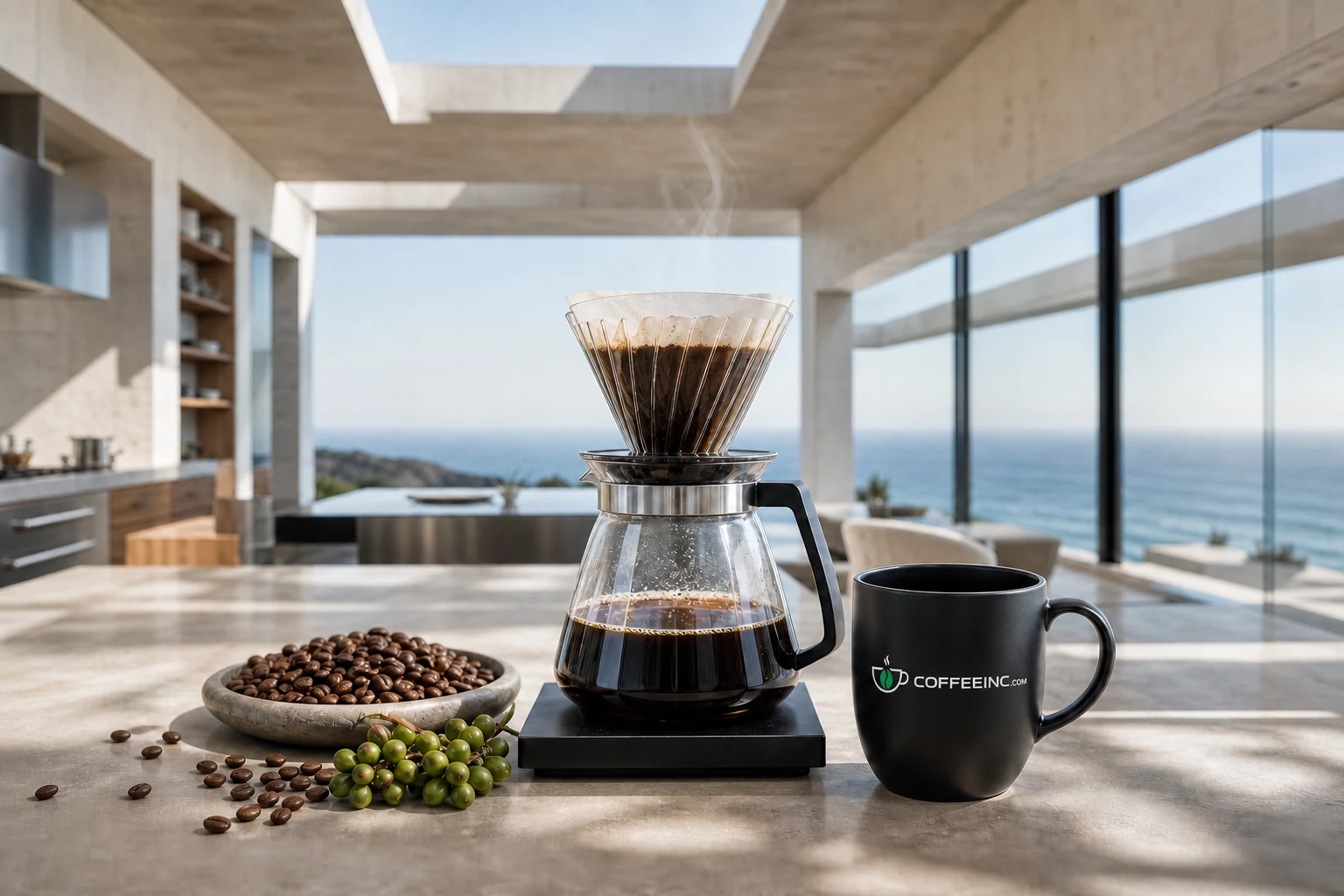
Coffee contains plant compounds called chlorogenic acids plus compounds formed during roasting. Laboratory tests can measure how a coffee extract reacts under controlled conditions, but those results do not prove that a cup prevents or treats disease. Roast, recipe, serving size, and human metabolism all matter, so an “antioxidant score” is not a health rating.
The short version
Researchers use the word antioxidant in more than one way. In a laboratory assay, it describes a chemical reaction. In a human study, researchers may measure absorption, metabolites, or a short-term biomarker. Population studies can identify associations between coffee drinking and health outcomes, but they cannot by themselves prove that coffee caused an outcome.
That makes coffee chemistry interesting—and easy to overstate in marketing.
| Evidence type | What it can show | What it cannot prove |
|---|---|---|
| Test-tube assay | How an extract reacts in one protocol | A health benefit in a person |
| Human absorption study | Which compounds or metabolites appear after drinking coffee | Disease prevention or treatment |
| Short intervention | A change in a measured biomarker during the study | A lasting clinical outcome |
| Observational study | An association in a population | That coffee caused the result |
Which compounds are researchers studying?
Coffee contains a complex mixture of compounds. Chlorogenic acids are an important group of phenolic compounds in green and roasted coffee. Roasting reduces many chlorogenic acids while creating other compounds, including brown Maillard-reaction products called melanoidins. Coffee also contains caffeine, trigonelline, and—in some unfiltered brews—diterpenes such as cafestol and kahweol.
These compounds are not interchangeable. Finding chlorogenic acids in coffee does not establish a therapeutic dose, and measuring a reaction in an extract does not tell us how the same compounds behave after digestion and metabolism. A detailed review by Ludwig and colleagues explains how growing, processing, roasting, and brewing affect coffee composition while separating chemical mechanisms from population evidence.
What laboratory antioxidant tests measure
Methods such as ORAC, FRAP, DPPH, and ABTS expose a prepared sample to reagents and measure a defined chemical response. Results can be useful when samples are prepared and tested under the same protocol. They are much weaker as a shopping comparison because solvent, dilution, roast, grind, extraction, and reporting units can differ.
The Folin–Ciocalteu method is often described as measuring “total phenolics,” but it can react with other reducing substances too. None of these assays reproduces digestion, absorption, metabolism, tissue exposure, or a clinical endpoint. A higher in-vitro number is therefore not proof that one bag of coffee is healthier.
How roast and brewing change the cup
Roast conditions change coffee chemistry. Moon, Yoo, and Shibamoto measured chlorogenic-acid levels across roasting conditions and reported a relationship between roast and the compounds measured in the beans. That supports a chemistry statement, not a medical recommendation.
Brewing adds more variables:
- Coffee-to-water ratio: more grounds usually means more extracted material in the drink.
- Grind and contact time: both affect extraction as well as flavor.
- Serving size: espresso is concentrated per ounce but served in less volume than drip coffee.
- Filter: paper and metal filters do not retain the same components.
- Species and processing: Arabica, Robusta, washed, natural, and honey-processed coffees begin with different profiles.
Because recipes differ, “most antioxidants” lists often compare unlike servings. For a better cup, start with a repeatable coffee-to-water ratio and a grind matched to your brewer—not an unsupported health ranking.
What happens after you drink coffee?
Human bioavailability research shows why test-tube results need context. In a small double-blind study, Stalmach and colleagues gave 11 healthy volunteers coffees containing different amounts of chlorogenic acids, then measured metabolites in plasma and urine. The study identified multiple metabolites and substantial person-to-person and dose-related variation; it did not test disease prevention.
Large reviews of coffee and health find many reported associations, but the authors also emphasize the need for robust randomized trials to determine whether those associations are causal. The 2017 BMJ umbrella review by Poole and colleagues is useful because it distinguishes observational and interventional evidence.
The responsible conclusion is narrower than many headlines: coffee contains measurable compounds, people absorb and metabolize some of them, and population research has reported associations worth studying. That is not evidence that a particular coffee prevents, treats, or cures a condition.
A practical way to buy and brew
- Match roast style to the flavors and brew method you prefer.
- Use a repeatable recipe so comparisons are meaningful.
- Treat “high-antioxidant,” “detox,” and similar language as claims that need clear methods and evidence.
- If organic certification matters to you, verify it and understand its scope. Organic rules address production and handling; they are not proof of superior taste, a health outcome, or absence of mold.
- For mold or mycotoxin claims, ask which product or batch was tested, which method and detection limit were used, and how often testing occurs. One result is not a permanent guarantee.
Our processing-method guide and organic-coffee guide explain two of those buying variables without turning them into medical claims. When you are ready to compare live options, use the verified facts and current availability in our organic coffee collection.
Frequently asked questions
Does coffee contain antioxidants?
Coffee contains chlorogenic acids and roast-derived compounds that react in laboratory antioxidant assays. Antioxidant in that context describes measured chemistry; it does not establish a clinical benefit.
Is light roast healthier than dark roast?
Roasting changes the balance of chlorogenic acids and roast-formed compounds, but chemistry differences do not prove that one roast is healthier. Choose roast primarily for flavor and brewing performance.
Is coffee an important dietary source of polyphenols?
It can be a major contributor where people drink it often. A Finnish dietary survey found coffee and cereals were major contributors to measured polyphenol intake, but contribution to intake is not proof of a health outcome.
Should I choose coffee by an antioxidant score?
No. Scores depend on the assay and sample preparation and usually do not match your brewing recipe or predict a human outcome. Freshness, roast, grind, ratio, and taste are more useful buying and brewing criteria.
Does this article mean coffee is healthy for everyone?
No. Individual response and medical context vary, and this article is not medical advice. Questions about caffeine, pregnancy, medications, sleep, or a health condition belong with a qualified clinician.
Sources
- Ludwig et al. — Coffee: biochemistry and potential impact on health (Food & Function, 2014)
- Stalmach et al. — Bioavailability of coffee chlorogenic acids in humans (Food & Function, 2014)
- Moon et al. — Roasting conditions and chlorogenic acid content (J. Agric. Food Chem., 2009)
- Poole et al. — Coffee consumption and health: umbrella review (BMJ, 2017)
- Ovaskainen et al. — Dietary intake and food sources of polyphenols (J. Nutrition, 2008)